Back to Campus, Not Back to Hunger: Inside Feeding San Diego’s College Food Pantry Partnerships
“Starving college student” is a common expression. It brings to mind cup noodles heated in dorm kitchens and scrounging food from the cafeteria. But the reality is that many students do not have access to the basic levels of food they need to complete their studies. According to the UCLA Center for Health Policy Research, 50% of California college students who were surveyed in 2025 reported experiencing food insecurity. Feeding San Diego’s college food pantry program brings nutritious foods to campus, creating a critical resource for local students. By partnering with universities and community colleges throughout the county, we help students focus on what matters: finishing their degrees.
A Hidden Crisis on San Diego’s Campuses
Last year, researchers from UCLA surveyed college students throughout California. Half of the students surveyed reported experiences with food insecurity. 28% said they skipped meals because they couldn’t afford food. On community college campuses, the number jumps even higher. More than 70% of California community college students surveyed were food insecure.
We know the same issue exists on San Diego campuses. According to data from Feeding America, nearly 430,000 San Diegans are facing hunger. College students face unique challenges, juggling tuition, rent, and groceries – often for the first time.
Angel, a graduating student at Mesa College, shared how difficult it can be to balance school, work, and life.
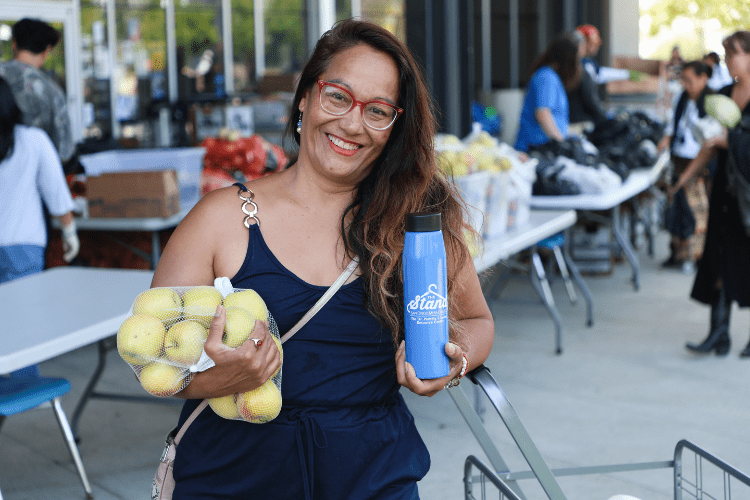
Angel at The Stand, Mesa College’s food pantry, supported by Feeding San Diego
“When you work less to go to school, you have to do these things called eat and be able to pay bills, so you have to get very wise about minimizing costs anywhere you can do it,” she explained. “I’m a temporary caregiver for my mom, and sometimes we watch my nephews and don’t always have enough food for them. So all that on a senior fixed budget and a student fixed budget.”
For Angel, getting a job with enough hours led to health problems and issues with grades.
“When you hear people say, ‘Oh, lazy student, why don’t you just work?’ The success factor goes way down,” she shared. “I was basically an A, B student all semester, and then I started working, and I’d get at least one C a semester.”
The Answer: College Food Pantry Partnerships
Feeding San Diego partners with universities and community colleges throughout San Diego County. One such partnership is MiraCosta College in Oceanside. Devon Boone, director of CARE (Campus Assessment, Resources, & Education) at MiraCosta College, hears regularly from students on campus.
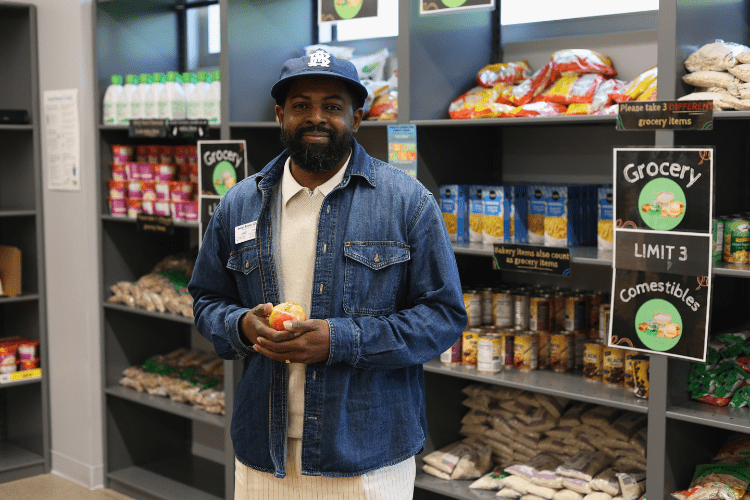
Devon in the MiraCosta College food pantry
“We’ll often hear students reference that hearing their stomach growl or feeling the pain of hunger while they’re trying to focus in class can be a distraction,” he explained. “I think it’s often daunting and scary to think about not having enough to feed a family or a child. All of those stressors get in the way of being able to focus on academics.”
The inside of the MiraCosta College Pantry looks like a corner store. The walls are lined with shelves stocked with rescued and purchased food. Fresh fruit fills wooden bins in the center of the room, making the space feel like a regular grocery store. Everything inside is free to the MiraCosta students. But keeping the shelves stocked is an ongoing challenge.
“The need has continued to grow ever since COVID hit,” Devon shared. “But the supply has fluctuated in what’s available, whether it be through grants to use toward purchasing food or from our food bank partners having to diversify supply across all the different nonprofits and other organizations that access from them. So, as that’s continued to fluctuate, it has been difficult to keep up with the demand. The partnership with Feeding San Diego has really afforded us the opportunity to get connected to food rescue opportunities. The moment we’re given more opportunities to bring in free donated items, the more we can think about where we can reallocate some of those grant funds to help support students.”
Meeting Students Where They Are
For some students, going off campus for food is not an option. Hayden, a freshman at Point Loma Nazarene University, shared the benefits of Loma Shares, the on-campus pantry.
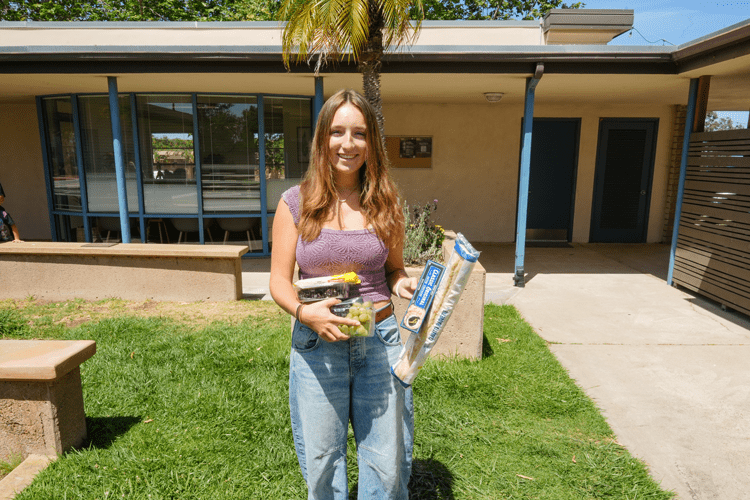
Hayden, with the food she received at the Loma Shares pantry
“I think the main thing that is bringing me to the pantry is that, as a freshman here, we actually don’t have any cars,” she explained. “You don’t really have a way to go out and get it from other places. We can take the shuttle, but it takes about two hours round-trip. It’s a lot of time, especially during a busy week.”
With college food pantries, the resources are right on campus where students already go.
“I think it’s really nice to be able to offer students access to snacks, as without it, we might not have that easy access,” Hayden shared. “I feel like they always have a good mix of some fun food and some healthy snacks, like vegetables and fruit. It’s really helpful, and I think benefiting a lot more people than [donors] might know.”
Why This Fall Is Different
Changes to the Supplemental Nutritional Assistance Program (SNAP) will likely affect students. Known locally as CalFresh, the program has undergone significant changes in 2026. Starting April 1, eligibility for people considered “noncitizens” changed, and additional changes to work requirements took effect on June 1.
For example, as of June 1, individuals under age 24 who aged out of foster care at 18 are no longer exempt from work requirements. Studies show that 83% of youth who were formerly in foster care face financial difficulties while in college, compared to 71% of their peers. With the potential loss of access to CalFresh, more students may rely on college food pantries for their basic needs.
You Can Help College Students
There are many ways to support the Feeding San Diego college food pantry program. Every dollar donated to Feeding San Diego helps provide four meals to the community, including local college students. Until August 31, a generous donor is matching every donation up to $50,000, helping you make twice the impact. In addition, there are lots of other ways to get involved. Find out more!
In Need of Food Resources?
If you are a college student in need of food resources, Feeding San Diego has food distributions throughout San Diego County. Visit our Find Food map to find a location near you. Your school may have a student needs or other type of support center, like MiraCosta CARE, where you can find additional resources. You can also call 2-1-1 or visit 211sandiego.org.