Food Insecurity in San Diego County Has Surpassed Peak Pandemic Levels, New July 2026 Data Shows
Feeding America released new Map the Meal Gap data on July 28, showing food insecurity in San Diego County has surpassed its pandemic-era peak. From 2020 through 2021, the average number of San Diegans experiencing food insecurity was about 351,000 individuals. A third consecutive year of increases brought the number to nearly 430,000 San Diegans. This data reflects what we’re seeing at our distributions: more people in San Diego County need help accessing food.
Understanding the Numbers
This year’s Map the Meal Gap study, which always uses data from two years prior, analyzes 2024 data. In 2023, Feeding America’s data showed that 394,660 people in San Diego were experiencing hunger. For 2024, the data shows the number has risen to 429,530, an 8.8% year-over-year increase and a 22.6% increase over the pandemic-era average.
In addition, the number of children experiencing food insecurity rose to more than 123,000. That’s a more than 23% jump from 2023.
While San Diego County’s food insecurity rate of 13.1% falls slightly below California’s statewide rate of 15%, the need remains substantial. An estimated 1 in 8 people and 1 in 6 children in San Diego County experience food insecurity, compared with 1 in 7 people and 1 in 5 children statewide.
Who’s Being Left Behind
This year’s data also shows that hunger hits some communities harder than others. In San Diego County, available data by race/ethnicity shows that 9.4% of white individuals, 29% of Black individuals, and 19% of Latino individuals experienced food insecurity in 2024.
There is also a major gap between who is facing food insecurity and who qualifies for support. The Supplemental Nutrition Assistance Program (SNAP), known as CalFresh in California, is the largest hunger-relief program in the country. However, 49.7% of people facing hunger in San Diego County are potentially ineligible for CalFresh. That’s a 5% increase from the previous year.
This data precedes H.R. 1, which significantly changed eligibility requirements based on characteristics beyond income. We expect the gap between the number of people who need assistance and those who do not qualify for federal programs to grow as these changes take effect. That means more neighbors like Esther, a retiree who does not qualify for CalFresh.

Esther
“I just retired from the DMV,” she shared at a summer food pantry. “I’ve had really good jobs, but now I can’t even survive. One income, my rent with all this inflation and everything, I’m barely making it. I have a good retirement and my Social Security. I’m 67. But when you pay over $3,800 just for your rent, you don’t have money, and I have a car payment and insurance. So, I don’t qualify for CalFresh because I make too much. How do I make too much money? It’s really, really hard. Right now, I have $4.00 in my checking account. And I have to go get medication. I don’t have money for food. I get food bank. Hopefully, it keeps coming. We get good stuff. But it’s getting to be less and less and less and more and more people.”
How Feeding San Diego Is Responding
With the support of generous donors and volunteers, Feeding San Diego continues to grow our programs to meet the need. In recent months, we have:
- Expanded the Feeding San Diego Marketplace hours,
- Opened 14 new school pantries
- Joined two home-delivery private programs to reach children in food deserts and older adults managing medical conditions
- Significantly increased the amount of food rescued from local food donors
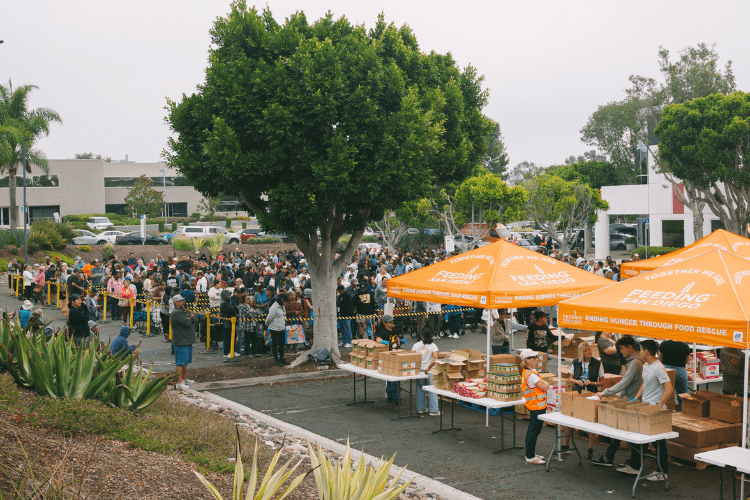
Between July 1, 2025, and June 30, 2026, Feeding San Diego provided more than 43 million pounds of food, equivalent to more than 36.2 million meals, to people experiencing hunger in San Diego County. On average, we served about 215,000 households every month. But there are still people we cannot yet reach.
You Can Help Close the Gap
The latest numbers show us that the meal gap has widened. But you can help. The most direct way to help end food insecurity in San Diego County is by donating. Every dollar you donate to Feeding San Diego helps provide two meals to your neighbors experiencing hunger. If a financial donation isn’t right for you, we have lots of other ways to get involved, including volunteer shifts at our distribution center and in the community, and opportunities to advocate for your neighbors. Learn more about how to help.