Keeping Local Produce Local: How Feeding San Diego’s Seed to Feed Initiative Is Helping Farmers and Families
The Miller Elementary library is bustling. For a few hours once a month, the room transforms into a school pantry. The tables are covered in canned tuna, peanut butter, and something extra special is waiting outside on their way out: boxes of local produce. Miller Elementary in Tierrasanta, part of our School Pantry program, is one of the schools benefiting from the pilot of Seed to Feed, Feeding San Diego’s newest sourcing initiative. In addition to the usual pantry staples, families and community members will now receive produce grown in San Diego. The goal of Seed to Feed is two-fold: to provide much needed income to local farmers and to provide nutritious, locally grown produce to San Diegans facing food insecurity.
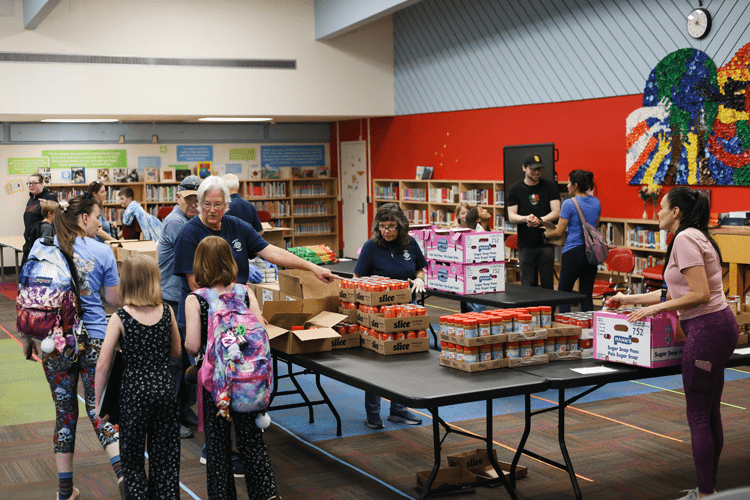
The Miller Elementary School Pantry
The Importance of Consistent Funds
Before Seed to Feed, there was the Local Food Purchase Assistance Program (LFPA). This federal program, administered by the USDA, provided food banks across the country funds to purchase food grown locally. Until it ended in 2025, Feeding San Diego used these funds to purchase and distribute locally grown produce to 1,350 households a month. LFPA created a reliable income stream for local growers, and nutrient rich produce to low-income families experiencing food insecurity.
“Working with Feeding San Diego via the LFPA has provided our farm with a reliable, steady income, which has allowed us to purchase new farm equipment,” shared Phil Noble, the owner of Sage Mountain Farm. His family-run operation uses regenerative farming to grow organic food for local distribution. He’s not the only farmer to express the importance of LFPA funding.

Phil, owner of Sage Mountain Farm
“Working with Feeding San Diego via the LFPA program has significantly benefited our farm, and we are incredibly grateful for the support,” explained Mike Clark, the general manager of J.R. Organics Farm. “This partnership has helped us achieve a zero-waste operation by providing a secure outlet for nearly everything we grow. Farming is demanding, and growing surplus without a guaranteed buyer can be a significant financial risk. Feeding San Diego has directly supported our growth over the past year.”
The cancellation of LFPA meant that we would no longer be able to purchase food from these farms. That’s where the Seed to Feed Initiative comes in.
Filling a Gap
Purchasing local produce from small growers, such as Sage Mountain and J.R. Organics, costs significantly more than other sources. Feeding San Diego primarily sources food through rescue. We work with farms, grocers, manufacturers, and distributors to redirect unsellable but edible food to people facing hunger. This approach is cost-efficient and reduces landfill waste.
At the same time, we’ve learned how essential local food sourcing is for a resilient food system and a healthier environment. While local sourcing is a small part of our overall operations, it plays an important role in supporting the environment, the regional economy, and the health of the people we serve. When LFPA funding ended, we needed a new way to continue supporting local growers. Fortunately, the Prebys Foundation stepped in.
“The farms we partner with were devastated by the LFPA program’s cancellation, and so were we,” said Patty O’Connor, chief operations officer at Feeding San Diego. “Investing in our local food system strengthens our economy, environment, and community. We’re truly grateful to the Prebys Foundation for reviving this program and allowing us to continue purchasing from local growers to help end hunger in San Diego County.”
The Prebys Foundation donated $1.5 million to fund the Seed to Feed Initiative, helping maintain partnerships with more than 20 local growers and provide nutritious produce to 2,254 households every month.
The Impact
With the Seed to Feed Initiative, families receive the freshest possible produce, while local growers gain a reliable customer. Kelly Hinch, a counselor at Miller Elementary, shared the impact of the produce at their school pantry.
“It means quite a bit to us and to our students,” she explained. “Providing access to fresh fruits and vegetables is a very important thing for students. It helps them eat healthy; something nutritious helps with their concentration and energy. School lunch provides a lot of healthy options through the salad bar, but having Feeding San Diego on campus with this pantry also provides that for students for dinner and on the weekends.”
Their school pantry has always had produce, but she’s noticed a change with Seed to Feed.
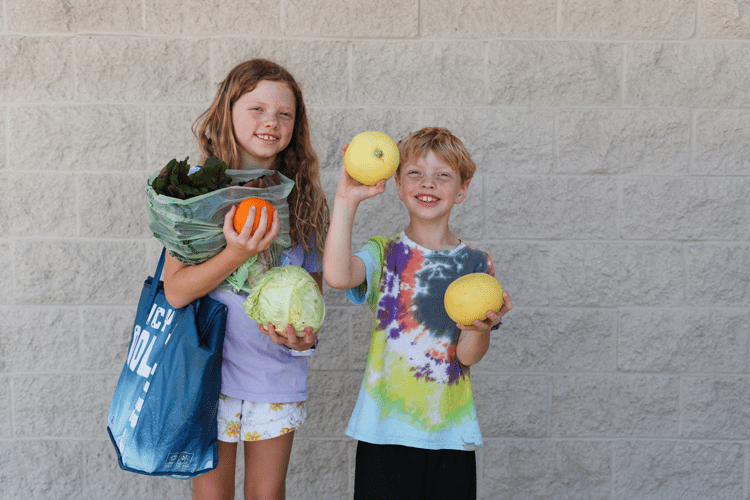
Miller Elementary students show off Seed to Feed produce
“The produce in the past has been great,” Hinch shared. “But what I’ve noticed through this new program is that there’s the leafy lettuce, the radishes, there are other fruits and vegetables that the kiddos may not have already been exposed to. Now they will be exposed to that, and that’s such an important part of development. It’s exciting to be exposed to something new, and the kids want to try it.”
Keeping Food in Communities
One of Feeding San Diego’s core tenets is keeping food in communities. Our food rescue program helps keep surplus food out of the landfills by diverting it to people who need it. With Seed to Feed, we have a new way of keeping local produce in San Diego County. This initiative also helps support our local food system and build stronger communities. Learn more about Seed to Feed or donate to Feeding San Diego to help support our mission to end hunger through food rescue.